
Orthodox Christianity
As an infant, I was baptized Maronite Catholic. I was chrismated into the Greek Orthodox church in 2026. Here is my page dedicated to my most personal saints.
As an infant, I was baptized Maronite Catholic. I was chrismated into the Greek Orthodox church in 2026. Here is my page dedicated to my most personal saints.
Index:

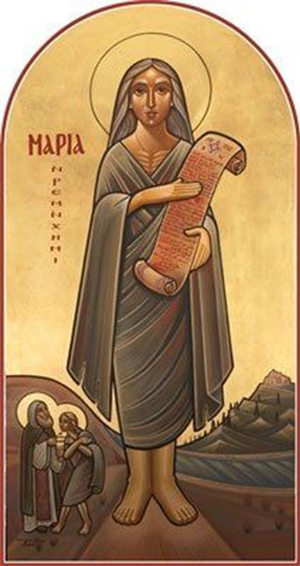
St Mary had been born in Egypt in 344 AD. She moved to Alexandria at the age of 12 and proceeded to take up prostitution for 17 years while living there. She did this, not out of necessity or need of pay, but out of her own lustful desires. At 29, she had witnessed Christians flocking to a church in Jerusalem. Upon trying to join them, she found an invisible mystical force preventing her from entering the grounds. Determined to undo her wrongs, she had prayed to Mother Mary and exiled herself to live in the desert for the next 47 years. During this time the monk Zosimas had met her and was shocked she had spoken his name without them being familiar. He was told to return in a year to aid her in receiving her first communion. True to his word, he had returned and had left St Mary to pray after her communion. She was discovered dead the next day, at 76, having completed her journey of repentance.


Around 270 AD, in Patara, St Nicholas was born to a couple who had prayed 30 years for a child. As their miracle baby, he was named after his bishop uncle. St Nicholas was raised and ordained under his uncle Bishop Nicholas of Patara. As an adult, St Nicholas set for his own pilgrimage to the Holy Land. He had predicted a great storm and prayed against evils, calming the waters and healing those wounded on the ship. Having made it through the perils, St Nicholas travelled to worship until he was called to return to Lycia. He continued his work in Myra, where he was made bishop. Under the rule of emperor Diocletian, Saint Nicholas was locked up amongst other Christians. He was divinely protected until Saint Constantine became emperor and had released him from prison. In 325, Saint Nicholas had joined the first ecumenical council. His later years were spent performing miracles in Myra, such as; appearing in Emperor Constantine’s dreams to save unjustly persecuted men, relieving Myra from famine, and saving those lost at sea. St Nicholas had passed in 343 AD, and his relics transferred to Bari in 1087.

Around 275 AD, St George was born in Cappadocia, modern-day Turkey. His father had died as a Roman army official when St George was only 14; this lead the son himself to pursue a similar path in adulthood. Under Emperor Diocletian, St George became military commander of the imperial guard. St George was fully against his emperor’s efforts to persecute Christians and destroy churches. In protest, he had freed his slaves and donated his wealth to the poor, before coming to Diocletian and confessing Christ as the truth. Diocletian’s army had rushed St George into prison, spearing him, but no spear brought him harm. He was then tortured in prison until a near-death. When being told to remove St George’s body from prison, the soldiers found that he had already been completely healed. Diocletian proceeded to have St George tormented at many other occasions with similar lack of success. St George continued to accredit God. When he kept prevailing, the wife of Diocletian Empress Alexandra had also confessed her faith in Christ. Both were given a death sentence. St George humbled himself to God before his beheading, being martyred at 30 years of age in 303 AD.
As famously depicted in his iconography, and at a time before he was made officer, St George was most well-known for his encounter with a serpent in Beirut. At Mt Lebanon, a dragon was kept at bay with regular sacrifices of children, who were decided upon by drawing lots. Once the local ruler’s daughter was drawn and brought to the serpent, St George had appeared to spear it while signing the cross. He had gotten the girl to tie her sash around the dragon to leash it, then paraded the creature at town before making it known it would be executed by sword. Twenty-five thousand men were baptized and a basilica then made at the site.
A resourceful website for those still new to Orthodoxy, or those familiar with the church and seeking more information. I highly recommend their Lives of the Saints supbage!
Introducing the Orthodox Church by Anthony M. ConiarisThis book was initially published in 1982 and written by Greek Orthodox priest Anthony Coniaris. Could not more highly recomend this to catechumens and inquirers. Others may also revisit ideas in faith they may have taken for granted or simply forgotten.
The Crucifixion of the King of Glory by Eugenia Scarvelis ConstantinouA 2022 book by lawyer and presbytera Constantinou, who had taught Biblical Studies in San Diego. Her writing helps immerse the reader into the exact context Christ suffered in. This read felt slow at first, but does an excellent job comparing parts of scripture to build up the setting and understanding of the period.
The Orthodox Way by Kallistos WareBritish Eastern Orthodox bishop Kallistos Ware's work in The Orthodox Way (1979) is widely recognized in Orthodox classes. Admittedly, I have yet to start this one but I did want to archive it.
